
Why Your TRT Stops Working Every Winter (And How to Fix It)
Published on:
Updated on:
People are asking...
How do you manage bph while on TRT? I’ve considered finasteride but hear very conflicting information about its usage....
Because of the way it works to decrease DHT levels, and because DHT is very important in sexual function, it has a known potential side-effect of erectile dysfunction. Despite this potential side ef... See Full Answer
Would a person that has low test and takes trt build more or less muscle than an average person that doesn’t take anything?...
They would generally build the same amount of muscle, assuming that "average person" was not also a low Testosterone individual. This is because the primary goal of TRT is to get you back to where you... See Full Answer
Do you think that most mental health issues are contra indications for starting TRT? Such as depression and bipolar for example? Or have you seen peop...
For us, we have had a significant number of patients join us with slight anxiety or depression start TRT and find that those mental health issues improved or went away for them. It is likely that it w... See Full Answer
Have a question? Ask us.
At AlphaMD, we're here to help. Feel free to ask us any question you would like about TRT, medical weightloss, ED, or other topics related to men's health. Or take a moment to browse through our past questions.
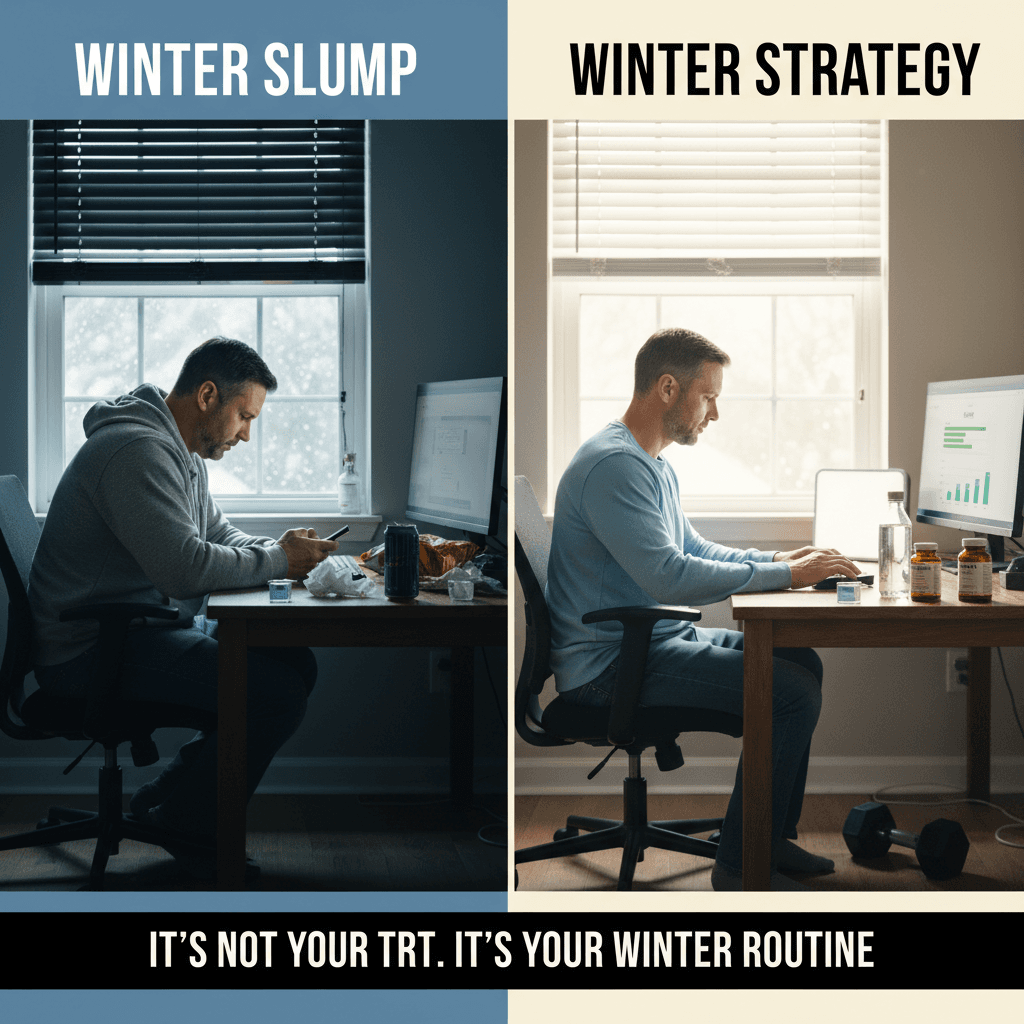
You've been dialed in on your testosterone replacement therapy for months, feeling strong and energized, and then December hits and suddenly everything feels off. It's not your imagination, and you're not alone in noticing this pattern.
Thousands of men on TRT report the same frustrating experience every year: the protocol that worked perfectly through spring and summer starts feeling inadequate as the days get shorter. Energy drops, motivation tanks, strength seems to plateau or even decline, and the mental clarity that made TRT worth it in the first place starts to fade. The natural assumption is that something has gone wrong with the treatment itself, but the reality is more nuanced and, fortunately, more fixable than you might think.
Your TRT Hasn't Failed, Your Environment Changed
The first thing to understand is that testosterone replacement therapy, from a pure pharmacological standpoint, doesn't just "stop working" because the calendar changed. If you're using the same protocol, the same delivery method, and maintaining consistent adherence, your body is still receiving roughly the same amount of testosterone it was getting in July.
What has changed is nearly everything else.
Winter fundamentally alters the environment your hormones operate in. Think of TRT as providing the raw material, testosterone, but that material still needs to interact with receptors, support cellular processes, influence neurotransmitters, and work within the complex system of your entire physiology. When that system is stressed, sleep-deprived, vitamin-deficient, and operating in darkness for most of your waking hours, even optimal testosterone levels can feel suboptimal.
This distinction matters because it shifts the solution from "fix the TRT" to "fix the environment the TRT is working in."
The Vitamin D Connection Most Guys Ignore
Vitamin D isn't technically a vitamin at all. It's a steroid hormone that your skin synthesizes when exposed to UVB radiation from sunlight. During summer months, even casual sun exposure, like walking to your car or eating lunch outside, generates meaningful vitamin D production. In winter, especially if you live above the 37th parallel, the angle of the sun makes it nearly impossible for your skin to produce adequate vitamin D regardless of how much time you spend outside.
This matters for men on TRT because vitamin D plays several critical roles in how testosterone functions. It influences the density and sensitivity of androgen receptors, the cellular doorways that testosterone uses to exert its effects. When vitamin D levels drop, these receptors may become less responsive, meaning the same amount of testosterone floating in your bloodstream produces a weaker effect at the cellular level.
Vitamin D also has direct effects on mood, energy, and muscle function that are independent of testosterone but often feel identical to low testosterone symptoms. The fatigue, irritability, and reduced motivation that come with winter vitamin D deficiency can easily be mistaken for TRT failure, especially when they arrive right on schedule every November.
The challenge is that you can't "feel" your vitamin D level the way you might notice low energy or poor sleep. It drops silently, and by the time you're experiencing symptoms, you've likely been deficient for weeks.
When Darkness Disrupts Your Hormone Rhythms
Your body runs on internal clocks that are synchronized primarily by light exposure, particularly bright light early in the day. These circadian rhythms don't just control when you feel sleepy. They influence cortisol production, melatonin release, body temperature regulation, and even the sensitivity of various hormone receptors throughout your body.
Winter shortens daylight hours and, for many men, eliminates morning light exposure entirely. You wake up in darkness, commute in darkness, work under artificial light, and return home after sunset. This constant dim environment confuses your circadian system, leading to later melatonin release, disrupted cortisol patterns, and poor sleep quality.
Poor sleep doesn't just make you tired. It directly impacts how your body handles testosterone. Sleep is when your body performs most of its hormonal regulation and receptor maintenance. Chronic poor sleep reduces androgen receptor sensitivity, increases sex hormone binding globulin (which binds testosterone and makes it unavailable), and elevates cortisol, which can antagonize many of testosterone's effects.
The cruel irony is that disrupted circadian rhythms also make it harder to fall asleep and stay asleep, creating a vicious cycle. Your TRT is still working, but the foundation it's built on is crumbling.
The Winter Weight Creep Nobody Talks About
Most men gain between five and ten pounds during winter months. Some of this is inevitable, a small increase in body fat was probably adaptive for our ancestors. But in the context of TRT, even modest weight gain can significantly change how testosterone behaves in your body.
Body fat, particularly visceral fat around your midsection, contains an enzyme called aromatase that converts testosterone into estradiol. A little estradiol is necessary and healthy for men, but as body fat increases, aromatase activity increases, and more of your testosterone gets converted. This doesn't show up as lower testosterone on standard labs because total testosterone remains stable, but the balance shifts.
Higher body fat also increases sex hormone binding globulin in some men, which binds testosterone and makes it biologically inactive. Again, your total testosterone looks fine on paper, but less of it is actually free and available to do its job.
The weight gain itself is driven by a perfect storm of winter factors: less outdoor activity because it's cold and dark, more calorie-dense comfort foods, holiday eating, and reduced motivation to maintain the discipline that kept you lean in summer. Your TRT protocol hasn't changed, but your body composition has, and that changes everything.
The Mood Factor That Mimics Hormone Problems
Seasonal patterns in mood are real and well-documented. Reduced light exposure decreases serotonin production, disrupts dopamine signaling, and can trigger genuine seasonal affective patterns in susceptible individuals. The symptoms, low energy, reduced motivation, social withdrawal, decreased libido, and mental fog, overlap almost perfectly with low testosterone symptoms.
This creates a diagnostic challenge. Are you experiencing these symptoms because your TRT isn't working, or because winter itself is affecting your neurotransmitter systems in ways that have nothing to do with testosterone? In most cases, it's primarily the latter, but it feels like the former.
The mind and body aren't separate systems. When your mood drops, your motivation to exercise declines, your sleep suffers, your food choices worsen, and your perception of your own physical state becomes more negative. You might actually be just as strong as you were in summer, but you feel weaker, and that subjective experience is real and valid even if the objective measurements haven't changed.
Men on TRT sometimes expect the treatment to fully insulate them from normal human experiences like seasonal mood variation. It doesn't, and it can't. Testosterone supports mood and resilience, but it doesn't override environmental and neurological factors that affect everyone.
Practical Strategies That Actually Move The Needle
Recognizing that winter changes the environment your TRT operates in suggests practical interventions that don't involve changing your protocol.
Light exposure, particularly in the first hour after waking, helps maintain circadian rhythm. Getting outside within 30 minutes of waking, even on cloudy days, provides significantly more light than indoor environments. If that's not practical, light therapy boxes that provide bright full-spectrum light can be effective alternatives. The goal is signaling to your brain that it's daytime, which helps maintain normal hormone rhythms.
Maintaining movement and resistance training through winter is critical, even when motivation is low. You don't need to match your summer intensity, but consistency matters more than perfection. Resistance training maintains insulin sensitivity, supports healthy body composition, promotes better sleep, and helps preserve the receptor sensitivity that allows testosterone to work effectively.
Nutrition deserves attention during winter months. This doesn't mean extreme restriction, but conscious awareness of portion sizes and food quality prevents the slow creep of body fat that changes how your body handles testosterone. Adequate protein intake supports muscle maintenance and satiety, making it easier to avoid overeating calorie-dense comfort foods.
Sleep hygiene becomes even more important during darker months. Keeping consistent sleep and wake times, even on weekends, supports circadian stability. Managing evening light exposure, particularly blue light from screens, helps melatonin production. Keeping your bedroom cool and dark optimizes sleep quality.
Regular follow-up with qualified healthcare providers allows for honest discussion about symptoms and appropriate testing. Tracking how you actually feel, not just how you think you should feel, provides valuable data. Sometimes symptoms that appear in winter reveal issues that were masked by summer's natural advantages, and those issues deserve attention.
When Adjustments Make Sense
There are situations where winter might reveal that your TRT protocol needs refinement. If you're experiencing symptoms during warmer months when environmental factors are optimal, winter will likely amplify those symptoms. If your treatment was barely adequate in summer, winter's additional challenges might push you below the threshold of symptom control.
This is where ongoing monitoring and personalized care become valuable. A provider who understands seasonal patterns can help distinguish between environmental factors and genuine protocol inadequacy. They can order appropriate testing, consider whether adjustments might help, and weigh the risks and benefits of any changes.
Some men do benefit from modest protocol adjustments during winter months, while others find that addressing lifestyle factors and environmental challenges is sufficient. There's no universal answer, which is why personalized medical care matters more than generic protocols.
The Role Of Continuous Support
One of the limitations of traditional TRT care models is their episodic nature. You get a prescription, follow up in several months, and you're largely on your own in between. This works reasonably well when everything is stable, but it leaves men struggling when seasonal changes create new symptoms or when lifestyle factors shift.
Services like AlphaMD have emerged to address this gap by providing ongoing monitoring and support rather than one-time prescriptions. Their model focuses on tracking how you're actually feeling throughout the year, adjusting protocols based on symptoms and lab work, and supporting the lifestyle factors that influence how TRT performs. When winter hits and symptoms appear, you're not waiting months for an appointment or trying to troubleshoot alone. You have access to providers who understand that seasonal patterns are real and that effective TRT care requires adaptation.
This approach recognizes that optimal testosterone replacement isn't just about achieving certain numbers on lab work. It's about helping you feel and function at your best despite environmental challenges, seasonal changes, and the normal variations in life that affect everyone.
Making Winter Work With Your TRT
The experience of feeling like your TRT stops working every winter is common, frustrating, and usually fixable. In most cases, your treatment hasn't actually failed. Instead, winter has changed the environment your hormones operate in, reducing light exposure, disrupting sleep, encouraging weight gain, and affecting mood through mechanisms that are independent of testosterone levels.
Understanding this distinction empowers you to address the real problems rather than chasing phantom solutions. Prioritizing morning light exposure, maintaining consistent exercise, managing body composition, protecting sleep quality, and staying engaged with knowledgeable healthcare providers can maintain the benefits of TRT even when the days are short and the temperature drops.
Your hormones don't exist in isolation. They work within the complex system of your entire physiology, and that system responds to seasonal changes whether you're on TRT or not. With awareness, practical strategies, and appropriate medical support, winter doesn't have to mean months of feeling suboptimal while you wait for spring.
Have a question? Ask us.
At AlphaMD, we're here to help. Feel free to ask us any question you would like about TRT, medical weightloss, ED, or other topics related to men's health. Or take a moment to browse through our past questions.
People are asking...
How do you manage bph while on TRT? I’ve considered finasteride but hear very conflicting information about its usage....
Because of the way it works to decrease DHT levels, and because DHT is very important in sexual function, it has a known potential side-effect of erectile dysfunction. Despite this potential side ef... See Full Answer
Would a person that has low test and takes trt build more or less muscle than an average person that doesn’t take anything?...
They would generally build the same amount of muscle, assuming that "average person" was not also a low Testosterone individual. This is because the primary goal of TRT is to get you back to where you... See Full Answer
Do you think that most mental health issues are contra indications for starting TRT? Such as depression and bipolar for example? Or have you seen peop...
For us, we have had a significant number of patients join us with slight anxiety or depression start TRT and find that those mental health issues improved or went away for them. It is likely that it w... See Full Answer
Get $30 off your first month’s order
Enter your email address now to receive $30 off your first month’s cost, other discounts, and additional information about TRT.
Legal Disclaimer
This website is a repository of publicly available information and is not intended to form a physician-patient relationship with any individual. The content of this website is for informational purposes only. The information presented on this website is not intended to take the place of your personal physician's advice and is not intended to diagnose, treat, cure, or prevent any disease. Discuss this information with your own physician or healthcare provider to determine what is right for you. All information is intended for your general knowledge only and is not a substitute for medical advice or treatment for specific medical conditions. The information contained herein is presented in summary form only and intended to provide broad consumer understanding and knowledge. The information should not be considered complete and should not be used in place of a visit, phone or telemedicine call, consultation or advice of your physician or other healthcare provider. Only a qualified physician in your state can determine if you qualify for and should undertake treatment.