
The 30-60-90 Day Checkpoint: What Should Be Improving (And When to Adjust)
Published on:
Updated on:
People are asking...
I’m at 120mg per week spaced m/w/f and currently past the two month mark. It seems like some of the early improvements or honeymoon phase wore off an...
That sounds like a solid plan. Review the lab results and see where you landed, adjust from there with your TRT provider to dial it in.... See Full Answer
What would ‘closer monitoring of labs’ look like? How often would you check? Particularly when just starting out. I started 6 weeks ago; 10mg/week tes...
We typically test after 6 weeks, and again at 12 weeks. If no adjustments are made to the dose or regimen, then we typically check once more 6 months later. After any dose adjustment, we would restart... See Full Answer
36 M - 4 weeks into treatment. 60MG test cyp injection Tuesdays and Fridays. Started w T level around 280 - all typical symptoms. Low energy, moodines...
Check out this timeline we give to our patients: - The Start, Weeks 1-4 - Many notice effects from the first few injections. During this time, more benefits will become apparent as the half-lives... See Full Answer
Have a question? Ask us.
At AlphaMD, we're here to help. Feel free to ask us any question you would like about TRT, medical weightloss, ED, or other topics related to men's health. Or take a moment to browse through our past questions.
You started TRT three weeks ago, and you're checking your reflection every morning like you're waiting for superpowers to kick in. Maybe you feel a bit better, maybe you don't feel any different at all. Either way, you're wondering: is this actually working, or did I just sign up for expensive placebo injections?
Here's the truth about your first three months on testosterone replacement therapy - what should actually be improving at each checkpoint, and how to tell the difference between "give it time" and "something needs to change."
The 30-Day Mark: You're Not Imagining It (But You're Not Done Either)
Let's get one thing straight: testosterone doesn't work like flipping a light switch. Your levels might normalize within days of your first injection, but your body needs time to respond to those levels. Think of it like watering a dried-out plant - the water gets there fast, but the leaves take a while to perk up.
What you should be noticing at 30 days:
Some guys feel it faster than others, but by week four, most men report better energy levels. Not "bouncing off the walls" energy, but more like you're not hitting that 2pm crash anymore. You might wake up feeling more rested, even if you're sleeping the same amount.
Libido often ticks up in the first month, though it can be inconsistent. Some mornings you feel 25 again, other days it's radio silence. That's normal - your body is adjusting to new hormone levels, and everything is recalibrating.
Mood improvements are subtle but real. You might notice you're less irritable, more motivated to actually do things instead of just thinking about doing things. The mental fog that's been hanging around might start to lift.
What's completely normal at 30 days:
- Inconsistent effects (great one week, meh the next)
- Not seeing any physical changes yet
- Feeling like nothing's happening at all
- Wondering if your dose is too low
Red flags that need attention:
- Severe acne that came out of nowhere
- Anxiety or mood swings that are worse than before
- Nipple sensitivity or tissue development (early gyno signs)
- Feeling significantly worse overall
Here's what most guys don't realize: the first month is partly placebo, partly real changes, and partly your brain just being happy that you're finally doing something about the problem. That's not a bad thing - it's all part of the process. But don't judge your entire protocol based on week two.
Month Two: Where the Real Work Begins
The second month is where TRT gets interesting. The honeymoon phase of "I'm doing something about this" wears off, and now you're dealing with actual physiological changes. Your body is building new red blood cells, your muscle protein synthesis is ramping up, and your androgen receptors are waking up after years of barely getting a signal.
What you should see at 60 days:
Energy should be more consistent now. If you felt good some days in month one, by month two those good days should be the norm rather than the exception. You're not dragging yourself through workouts anymore - you actually want to train.
Strength improvements start showing up if you're lifting. You're not going to add 50 pounds to your bench press, but you might notice you can push harder, recover faster between sets, or add a few reps where you used to stall out.
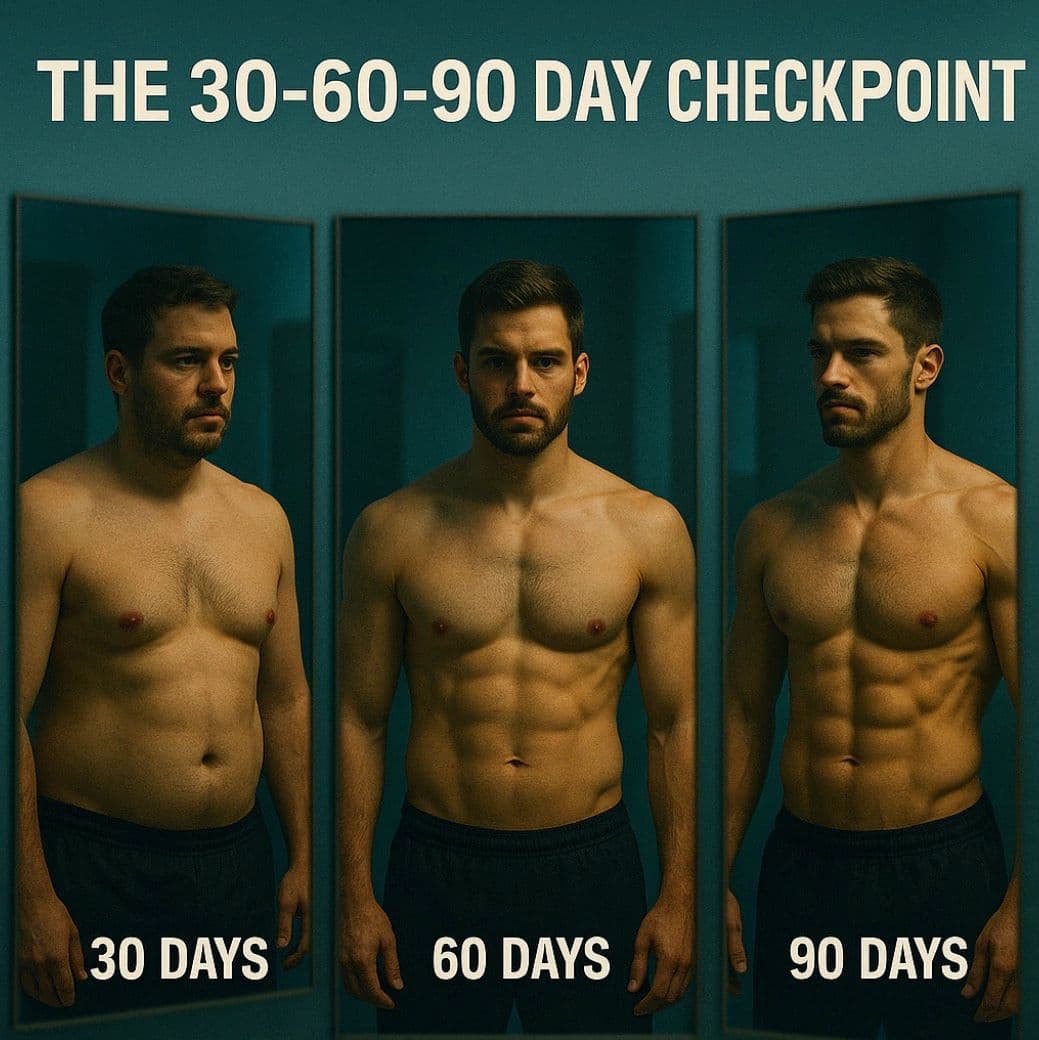
Body composition begins shifting, even if the scale doesn't move much. You might notice your shoulders looking a bit fuller, your waist getting tighter, or muscles appearing more defined. This is testosterone doing what it does best - helping you build and maintain lean tissue while mobilizing fat.
Mental clarity should be significantly better. That brain fog you've been blaming on age or stress? It's probably lifting. You can focus on tasks longer, remember things better, and generally feel sharper.
This is also when some guys start feeling TOO good and make a critical mistake: they think they should feel even better, so they bump their dose without consulting their doctor. Don't do this. Month two is not the time to freelance with your protocol.
When to actually consider adjusting at 60 days:
- If you feel absolutely nothing - no energy change, no mood improvement, no libido increase whatsoever
- If side effects are interfering with your life (severe acne, sleep problems, anxiety)
- If you're getting symptoms of high estrogen (water retention, emotional instability, erectile issues despite good T levels)
When to stay the course:
- If you're seeing some improvements but want more (patience, you're not done cooking yet)
- If one aspect is better but not everything (rarely does everything improve at the same rate)
- If you feel good most days but not every single day (you're human, not a hormone robot)
The 90-Day Reality Check: What Fully Optimized Actually Feels Like
Three months is the magic number for TRT. This is when your body has fully adapted to your new testosterone levels, when your bloodwork will give you a true picture of where you're at, and when you can actually assess whether your protocol is dialed in or needs tweaking.
What you should see at 90 days:
Consistent energy throughout the day. You wake up ready to go, you don't crash in the afternoon, and you still have gas in the tank for evening activities. This doesn't mean you're never tired - it means your baseline energy is dramatically better than it was before TRT.
Libido and sexual function should be improved and stable. Not "teenager who can't think about anything else" libido (that's probably too high), but a healthy, consistent drive that feels natural. Morning erections are back, performance anxiety is down, and things generally work the way they're supposed to.
Body composition changes should be visible. If you're training and eating reasonably well, you should see more muscle definition, better muscle fullness, and fat loss, particularly around the midsection. The scale might not have moved 20 pounds, but the mirror tells a different story.
Mental and emotional stability. This might be the most underrated benefit - you're more even-keeled, less reactive to stress, more confident in social situations, and generally just feel like yourself again (or maybe like yourself for the first time).
Recovery is noticeably better. You're not sore for three days after a workout. You bounce back from physical stress faster. Sleep quality has improved. Your body just handles stress better across the board.
If you're at 90 days and none of this is happening, something needs to change. Not a small tweak - a real evaluation of your protocol.
The "Do I Need to Adjust?" Framework
You probably need to adjust your protocol if:
Nothing has improved: If you're three months in and you genuinely feel the same as before you started, your dose might be too low, your injection frequency might be wrong, or you might need to address estrogen management. Time for labs and a serious conversation with your provider.
Side effects are dominating benefits: Acne, hair loss, sleep problems, anxiety, or gyno symptoms mean something is off. Usually this means your dose is too high, your estrogen is poorly managed, or you need to adjust injection frequency.
You felt great then crashed: Some guys feel amazing for the first 6-8 weeks, then feel worse. This often indicates your estrogen has climbed too high or your hematocrit is getting elevated. Labs will tell the story.
Inconsistent effects: If you feel great for two days after injection then lousy by day five, your injection frequency probably needs adjusting. Most guys do better with smaller, more frequent doses.
You should NOT adjust if:
- You're feeling better but not "perfect" (perfect doesn't exist, even on TRT)
- One symptom hasn't improved yet but others have (give it more time)
- You had one off week in month two (normal fluctuation)
- Someone on Reddit said you should feel more jacked by now (ignore Reddit)
- You want to feel how you felt during the first-week honeymoon phase (that was partly placebo)
Trust the Timeline, Not the Impatience
TRT is not a quick fix. It's a long-term optimization strategy that requires patience, proper monitoring, and realistic expectations. The guys who succeed with TRT aren't the ones who chase feelings or constantly tweak their protocol - they're the ones who give their body time to adapt, work with knowledgeable providers, and understand that month three is just the beginning.
Your body is complex. Hormones interact with each other, with your lifestyle, with your genetics. What works perfectly for your buddy might not work for you. The first 90 days is about establishing your baseline and figuring out what "optimized" feels like for you specifically.
If you're working with a provider who gets this - who understands the actual timeline for TRT benefits and knows when to adjust versus when to wait - you're already ahead of most guys. AlphaMD's approach to testosterone therapy is built around realistic expectations, proper monitoring, and protocols that are individualized rather than cookie-cutter. Because one-size-fits-all dosing is how you end up chasing your tail for months.
Give yourself the full 90 days before you judge whether TRT is working. And when you hit that three-month mark, get labs done, assess honestly how you feel compared to day zero, and then decide with your provider whether you're dialed in or need adjustments. Most guys find they're closer than they think - they just needed to stop comparing themselves to the hype and start comparing themselves to where they started.
Have a question? Ask us.
At AlphaMD, we're here to help. Feel free to ask us any question you would like about TRT, medical weightloss, ED, or other topics related to men's health. Or take a moment to browse through our past questions.
People are asking...
I’m at 120mg per week spaced m/w/f and currently past the two month mark. It seems like some of the early improvements or honeymoon phase wore off an...
That sounds like a solid plan. Review the lab results and see where you landed, adjust from there with your TRT provider to dial it in.... See Full Answer
What would ‘closer monitoring of labs’ look like? How often would you check? Particularly when just starting out. I started 6 weeks ago; 10mg/week tes...
We typically test after 6 weeks, and again at 12 weeks. If no adjustments are made to the dose or regimen, then we typically check once more 6 months later. After any dose adjustment, we would restart... See Full Answer
36 M - 4 weeks into treatment. 60MG test cyp injection Tuesdays and Fridays. Started w T level around 280 - all typical symptoms. Low energy, moodines...
Check out this timeline we give to our patients: - The Start, Weeks 1-4 - Many notice effects from the first few injections. During this time, more benefits will become apparent as the half-lives... See Full Answer
Get $30 off your first month’s order
Enter your email address now to receive $30 off your first month’s cost, other discounts, and additional information about TRT.
Legal Disclaimer
This website is a repository of publicly available information and is not intended to form a physician-patient relationship with any individual. The content of this website is for informational purposes only. The information presented on this website is not intended to take the place of your personal physician's advice and is not intended to diagnose, treat, cure, or prevent any disease. Discuss this information with your own physician or healthcare provider to determine what is right for you. All information is intended for your general knowledge only and is not a substitute for medical advice or treatment for specific medical conditions. The information contained herein is presented in summary form only and intended to provide broad consumer understanding and knowledge. The information should not be considered complete and should not be used in place of a visit, phone or telemedicine call, consultation or advice of your physician or other healthcare provider. Only a qualified physician in your state can determine if you qualify for and should undertake treatment.